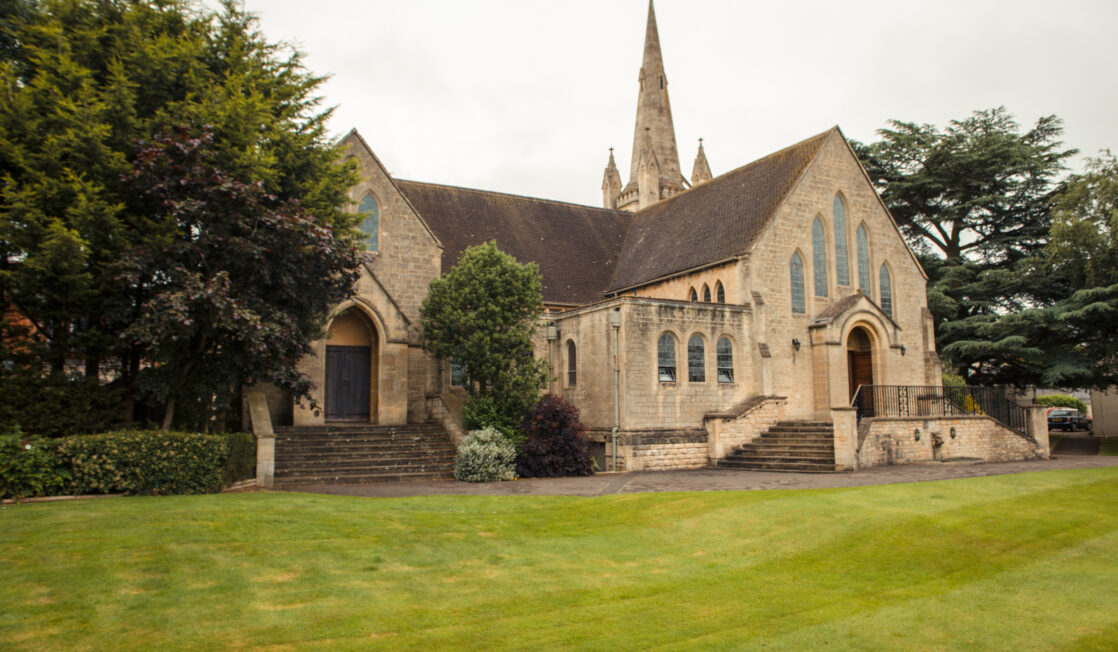
Headmaster's Assembly : Monday 10th November 2025
Remembering to put others before yourself for a greater common good whenever you can is a very good thing – because there can be no greater virtue than that.
I’m going to tell you a story about a young man, called Stanley, who was born in East London in 1926. He grew up with his parents and younger sister, Betty. Like many working class boys did at the time, he skipped school when he could, and liked to play games in the street, kicking a ball around with his friends. When the second world war started, he looked on as many thousands of British soldiers went overseas to fight and, desperate to serve his country, he signed up at the local recruiting office at the age of 17, lying to the recruiting serjeant about his age (one had to be 18 to go overseas and fight at the time). He joined the Royal Welch Fusiliers, an infantry regiment, and went through basic training to prepare him for deployment to Europe. In September 1944, a few months after D-Day, he was sent to Holland and joined other British and Allied forces fighting their way towards Germany to take the major port city of Antwerp so that the allies could use it to supply troops from across the English Channel. The going was slow, and hard, the Germans putting up fierce resistance from well-defended positions.
In mid-October, a major offensive operation codenamed ALAN, and led by the 51st Welsh Division, begun to liberate the town of S’Hertegenbosch, a typical Dutch settlement criss-crossed by canals and inhabited by about 50,000 people – about the same size as Stroud and its surrounding villages.
Stanley was killed during an assault into the town by German machine gun fire, falling as he crossed open ground with his Company of around 200 other soldiers.
Stanley is buried in the Roman Catholic Cemetery at Heesch and rests in Grave 5, next to his friends and comrades, Fusilier William Page, aged 34 from Cheshire, and Fusilier Ralph Brooks, aged 28, from South Wales. All three died during the same assault on 22 October 1944, just over 80 years ago.
Stanley’s Headstone reads:
Held in Deep and Constant Memory
By Dad, Mum and Betty
He Died For Us
His story is one of millions. Of those who sacrificed their life so that we can enjoy our liberty today. He was, like millions of others in the first and second world wars and wars since, drawn to serve, to give to the greater good.
Stanley was my great uncle – Dad and Mum were my Great Grandparents Stanley and Georgina Parsons, and Betty was my Grandmother and so his story is a personal one. His loss has run through my family’s history for the last 80 years, so much so that when I told my grandmother that I was going to join the Army at a slightly riper age of 24, she burst into tears. Fortunately, her worst fears were never realised despite several very close shaves.
When the Last Post is played on Remembrance Sunday and Remembrance Day and we observe the two minutes’ silence, I think about Stanley. I think about William Page and Ralph Brooks and countless others unknown to me who endured the terrible afflictions of war to fight for our freedom. I remember the soldiers I fought alongside and who didn’t come home from Iraq or Afghanistan – names etched in my mind – Dan, Jay, Mark, Paul, Kevin.
But it’s not unreasonable for us to ask ourselves – why do we spend time, like we did yesterday on Remembrance Sunday, and on the 11th November, marking the occasion? Stanley died over 80 years ago. My grandmother passed away several years ago and so the direct connection to world war two for me is now gone. My Grandmother Betty used to tell me stories about life during the Blitz in London and how she used to hear the terrifying sound of Hitler’s V2 Doodlebug rockets flying overhead, like whizzing, screeching fireworks.
There are no veterans of the first world war left – the last, Harry Patch, died around 15 years ago aged 111. And there are very few WW2 veterans who remain to tell their story. I was incredibly privileged some years ago to be leading a battlefield tour in Normandy accompanied by a veteran who had fought after D Day. We walked the lanes that he had fought through some 70 years before, even showing us the actual ditches he had dived into for cover when under fire. And he shed tears when we reached a small roadside memorial commemorating the loss of his comrades after a particular battle. His stories were real, personal, tangible. Opportunities to hear those stories first hand are almost gone.
So what do we do when there are no veterans left? Will we still commemorate the two great wars and the sacrifices made?
We will because it is too important not to. And remembrance should not be limited to remembering the dead of the two world wars and more recent conflicts; we should use it to celebrate the idea of service – that most important of values.
Remembrance and sacrifice lives on through the service of the generations that have come since – and in this current generation – through your service, your giving of time, and your commitment to giving to others.
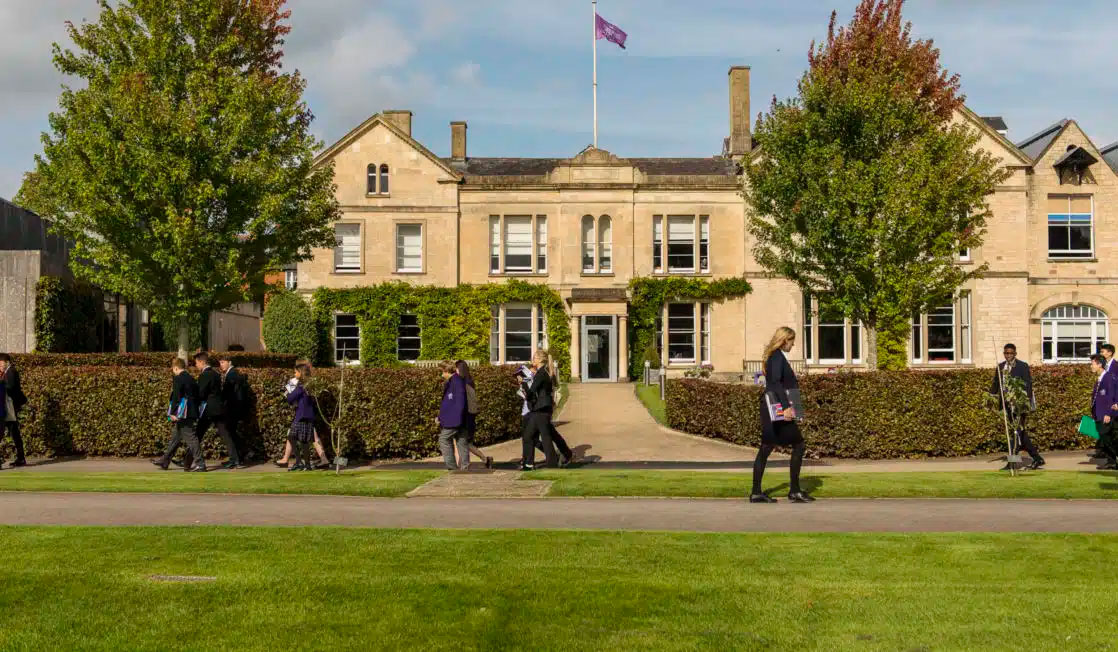
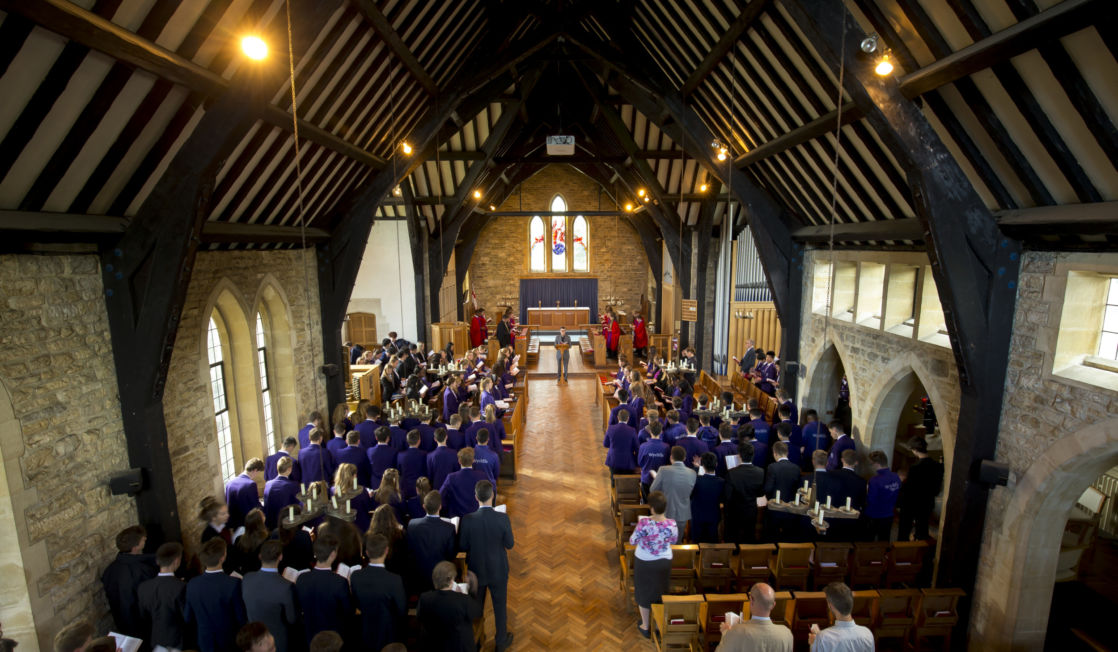
It is a special privilege for me to lead our school community where so many of you have direct links to our military with serving parents. But it also special to lead a school where so many of you give so much back to the community – through your singing, participating in CCF, DofE, Round Square and charity initiatives, for example. Yesterday, many of you sung in the choir, paraded as part of the CCF or simply attended the Chapel service. Thank you for doing so. It is vital traditions like this endure.
So, in this and future periods of Remembrance, I ask that you not only use the silence to think about those names unknown to you – Stanley and the millions of others who died for us – but to also reflect on how you are serving your school, your community. Remembering to put others before yourself for a greater common good whenever you can is a very good thing – because there can be no greater virtue than that.